
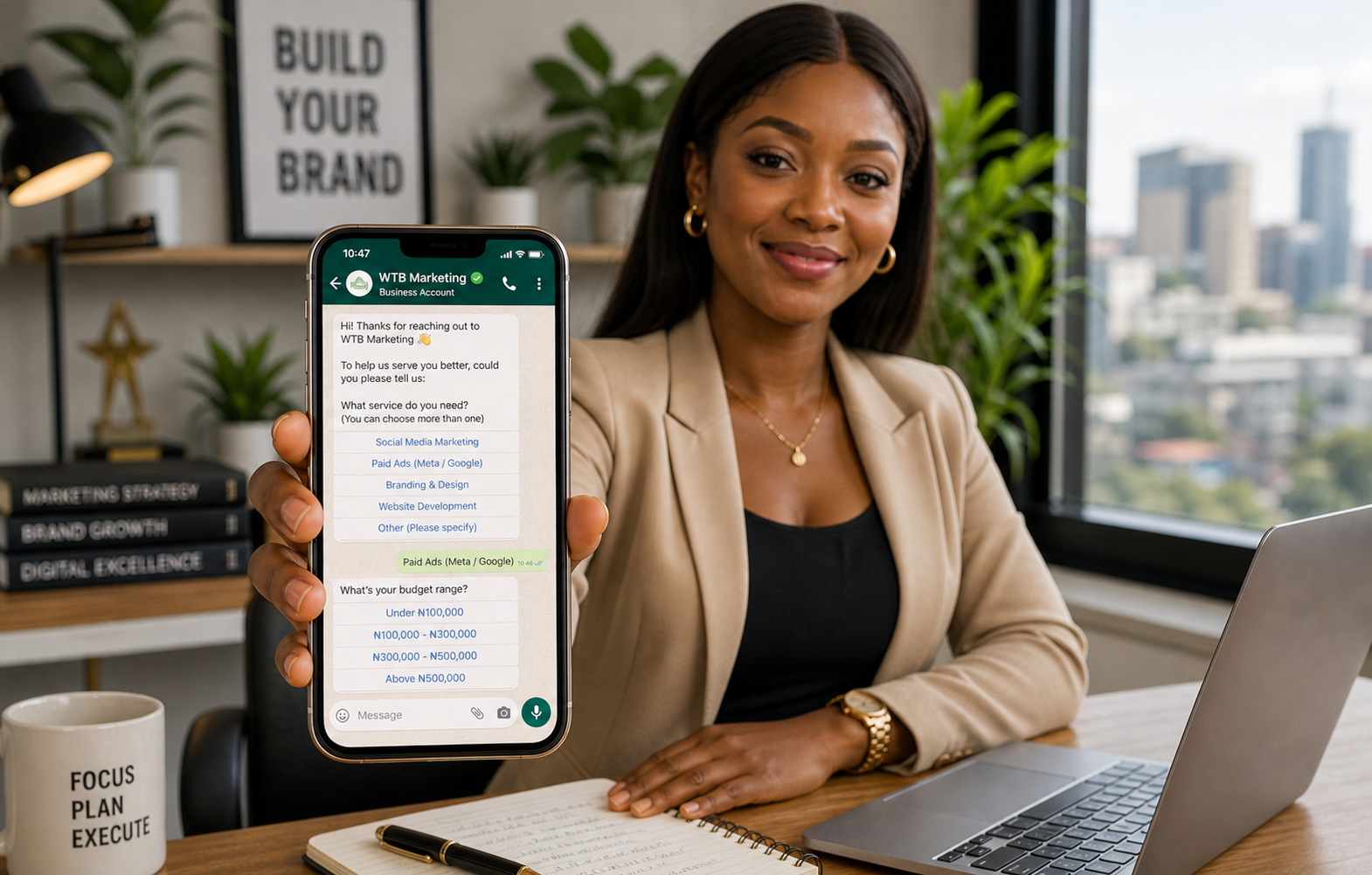
Do not optimise click-to-WhatsApp campaigns for the cheapest chats alone. Compare Facebook and Instagram sources, inspect placement performance, show price and buying conditions early, qualify enquiries politely, reply quickly and measure cost per qualified conversation and sale. Change one variable at a time.
Why your Ads Manager looks happy while your sales team is tired
A “conversation started” is not the same as a serious buyer. If your ad promises a vague transformation and hides the price, curious people will ask for basic information. If the first reply is slow, ready buyers may leave. And if you count every “Hi” as a lead, your dashboard will congratulate itself while your bank account asks questions.
WhatsApp’s own small-business guide describes these as Facebook or Instagram ads that open a chat. It advises a complete business profile, clear reason to message, greeting and away messages, fast replies and optimisation for leads that actually matter.
1. Test Facebook against Instagram—do not assume one must go
For some Nigerian offers, Instagram may produce more qualified conversations. For others, Facebook can win on paid customers. The right question is not “Which app feels premium?” but “Which source brings people who fit the offer, can afford it and buy?”
Break down performance by platform and compare cost per qualified chat, cost per sale and average order value—not just cost per message. If Instagram is consistently better, test a separate Instagram-focused campaign. If Facebook is weaker, inspect creative and audience before cutting it. Keep budget, offer and response process comparable so the test tells you something useful.
2. Look at placements, especially where accidental or low-intent taps may occur
Feeds, Stories, Reels, Search results and Marketplace can put the same offer in very different moments. Some placements may attract weak conversations for your specific product. Others may surprise you. Check the placement breakdown and chat outcomes before excluding anything. A cheap placement is only cheap if it brings buyers.
Run a controlled test: keep the same offer and creative, compare an eligible broad-placement setup with a narrower manual setup, and tag resulting conversations. Remove a placement only when it repeatedly underperforms on qualified leads or sales. Meta’s placement recommendations are broad defaults, not proof that every placement is right for every Nigerian business.
3. Put price and buying conditions where people can see them
If price is fixed, show it in the creative or first lines of copy. If the work is customised, give a real starting range and explain what changes the quote. Add location, delivery, minimum order, turnaround, what is included and who it is for. Do not make a customer open WhatsApp to learn the one fact that would have ruled them out.
Example ad copy for an illustrative product: “From ₦35,000. Lagos delivery from ₦2,500. Ready within three working days. Message us with your preferred colour and location.” These are sample numbers, not WTB prices. The point is that a serious buyer arrives informed, and someone outside the fit can move on without wasting anybody’s time.
4. Ask a useful qualifying question, then help
A prefilled opener can ask for product, budget range or location, but do not turn the first chat into an immigration interview. A good first response might be: “Thanks for reaching out. Which size do you need, where are you based, and when do you need it?” For services, ask about the goal and timeline. Give the answer to the customer’s question before requesting ten more details.
Use WhatsApp Business labels or a simple tracker: new, qualified, quoted, won, not now. Record campaign, platform and placement where possible. This is how you learn whether the apparent “time-waster” problem is traffic quality, offer clarity, response speed or price fit.
5. Measure the sale path, not the greeting
Track ad spend → chats started → qualified chats → quotes → sales → revenue. Your key number is cost per customer, supported by cost per qualified conversation and reply time. If lots of qualified people receive quotes but never pay, the issue may be trust, terms or closing—not ad placement. If almost nobody qualifies, revisit creative, offer, targeting and source.
Check our broader guide on ads that get clicks but not customers. If your inbox is overwhelmed, a thoughtfully configured WhatsApp AI assistant can answer common questions and route qualified enquiries to a human; it should not invent prices or pretend every chat is a sale.
A seven-day rescue plan
Day one: export recent chat outcomes and label at least a useful sample. Day two: compare Facebook, Instagram and placement by qualified rate. Day three: rewrite the ad with price or starting range, location and offer terms. Day four: fix the first WhatsApp reply and business profile. Days five to seven: run a controlled creative or placement test and review cost per qualified chat and sale. Do not change audience, creative, placements and pricing in the same hour; then nobody knows what worked.
FAQ
Should I turn off Facebook for WhatsApp ads?
Only if your own campaign data shows consistently weaker qualified conversations or sales after a fair test. Instagram is not automatically better for every offer.
Should I remove Marketplace or Search placements?
Inspect outcomes by placement first. Test a narrower setup if you see weak-quality traffic; exclude a placement only when the numbers support it.
Will showing price reduce messages?
It may reduce curiosity chats. That can be a good trade if qualified conversations and sales per naira improve. Test it rather than judging by message count alone.
Ask WTB to audit your WhatsApp ads. Send the offer, budget, screenshots of the campaign breakdown and a sample of anonymised chat outcomes. We will identify the bottleneck and rebuild the route from ad to paying customer.