
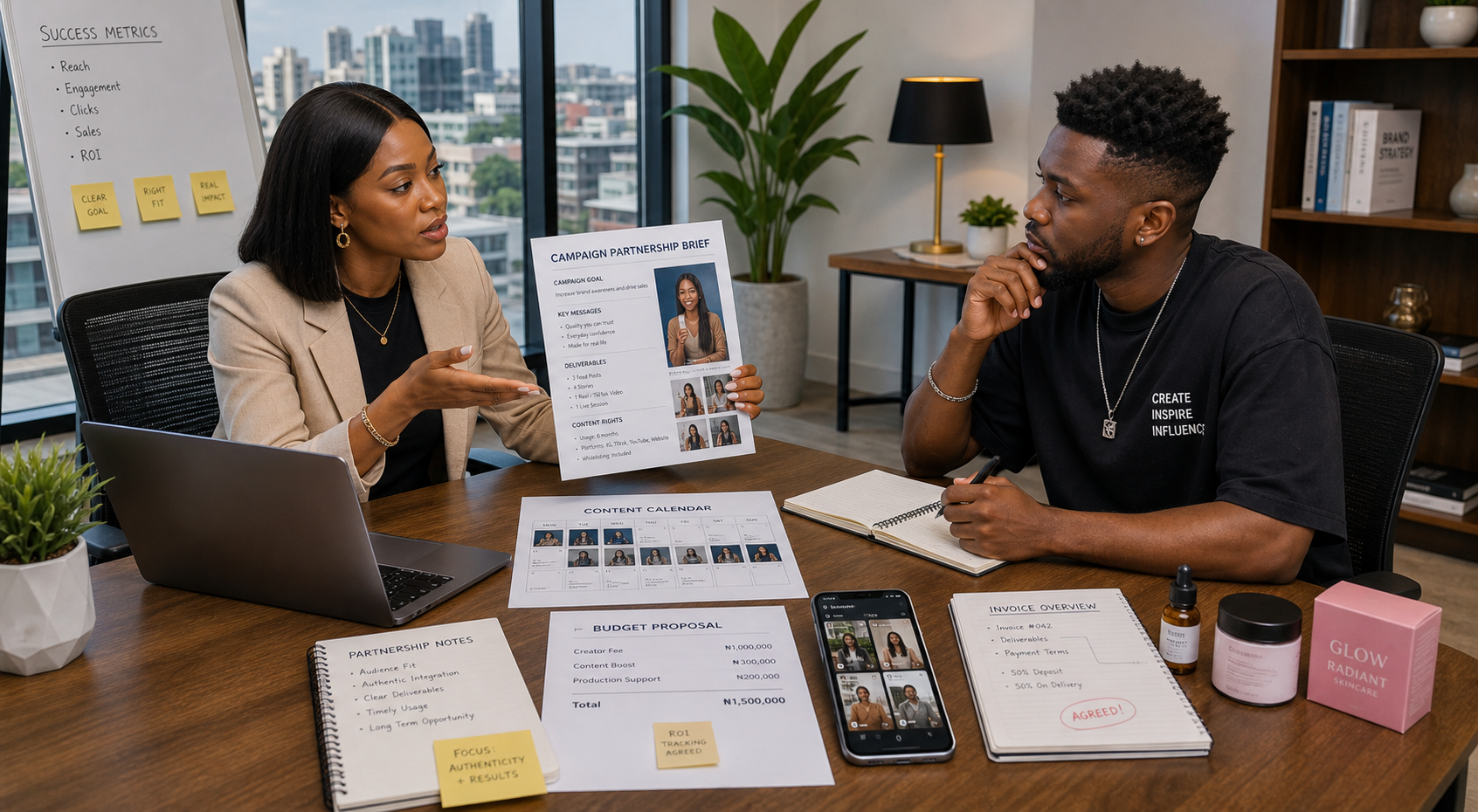
Yes, Nigeria's creator economy is growing quickly. But many brand deals still underperform because too many brands are buying noise instead of structure, and too many campaigns are built around excitement instead of outcomes.
The numbers sound exciting. The daily reality feels less glamorous.
According to a Guardian report published on March 15, 2026, the 2026 Africa Creator Economy Report values the sector at about $3.1 billion and projects it could reach $17.8 billion by 2030. That sounds huge, and it is. But the same report also says more than half of African creators earn less than $100 a month.
That is the emotional contradiction sitting under the whole conversation. The sector looks rich. Many of the people inside it still feel financially exposed. The market looks loud. The structure behind it is often still fragile.

Why are so many deals still bad if the market is growing?
Because growth and maturity are not the same thing. A bigger market does not automatically mean smarter briefs, fairer creator structures, or better campaign thinking. It can also mean more confusion with a bigger budget.
The Guardian report says public capital for digital creators in Nigeria is still scarce, platform monetisation is still limited, and many creators rely heavily on brand partnerships to survive. That changes the emotional temperature of the market. Suddenly, brand deals are not just opportunities. For many creators, they are oxygen.
And when one side needs the deal to survive while the other side needs the deal to perform, panic can quietly replace clarity.
The real problem is not just pricing
We have already talked before about influencers charging too much. But pricing is only one visible symptom. The deeper disease is that many Nigerian brands still buy creator campaigns badly.
They choose creators because they are loud, not because they are right. They write weak briefs. They expect conversion from content that was only built for attention. They forget usage rights. They forget landing pages. They forget follow-up. Then, when the results disappoint them, they act like the problem was only the creator's fee.
Sometimes the creator was overpriced. Sometimes the campaign was simply under-designed.
What the strongest creator deals are doing differently in 2026
A January 2026 Vogue report on how influencer marketing is changing says brands are moving toward deeper creator relationships, more consulting-style involvement, more long-term partnerships, and more emphasis on thought leadership and expertise. That global shift matters locally too.
The smartest brands are no longer asking only, "Who can post this?" They are asking:
- Who can help shape the story?
- Who already has the audience's trust?
- Who can create content that works beyond one post?
- Who can help us build cultural relevance, not just temporary visibility?

What Nigerian brands are still getting wrong
1. They buy followers instead of fit
The creator looks famous. The comments are busy. The reels move. But does this person really speak to your buyer? If the answer is no, your business may be paying luxury rates for premium distraction.
2. They treat creators like media slots
A creator is not just a billboard with skincare. Or finance. Or fashion. Or food. The best creators carry community, taste, emotion, and trust. If your brief kills their natural tone, your content may come out polished but dead.
3. They expect content to fix a weak funnel
If the product page is confusing, the offer is flat, the WhatsApp follow-up is slow, or the landing page looks like it was built during emotional distress, the creator campaign may still fail. Not because the creator lacked value. Because the system underneath the post was not ready.
4. They buy one post and hope for a miracle
One-off campaigns can work. But many categories now need repetition, retargeting, reused content, UGC, whitelisting, and stronger ambassador thinking. One post is often not a strategy. It is an announcement with anxiety.
What creators are still getting wrong
To be fair, brands are not the only ones behaving like drama departments with budgets. Some creators still oversell vague influence, under-explain deliverables, and price themselves like trust is automatic. It is not.
Creators who want stronger long-term income will increasingly need:
- clearer rate logic
- better packaging of deliverables
- stronger proof of audience fit
- more professionalism around timelines and reporting
- more thought about how their content drives business outcomes
So what should brands do now?
Start treating creator marketing less like random celebrity spending and more like a growth system.
That means your business should think in layers:
- Ambassador structure: fewer one-night stands, more repeat trust
- UGC support: more usable content, less dependence on one face
- Whitelisting and paid amplification: let strong creator content work harder
- Rights and reuse: content should not die after one upload
- Landing-page readiness: traffic deserves a better destination
- Measurement: clicks, saves, inquiries, watch quality, and conversion signals
Where WTB comes in
This is exactly where WTB can help your business separate the gold from the dust. Not by blindly shouting "influencer marketing still works," but by helping you figure out when creator partnerships should be ambassadors, when they should be UGC, when they should be paid social assets, and when they should be avoided completely.
If your business wants creator marketing that feels less chaotic and more commercially intelligent, we can help you review creator fit, campaign design, funnel readiness, landing pages, and content reuse strategy before you spend money to learn the same painful lesson twice.
Sources behind this article
This piece draws on reporting from The Guardian, March 15, 2026 and trend analysis from Vogue, January 9, 2026.
FAQ
Does this mean brands should stop working with creators?
No. It means brands should stop working with creators lazily.
Are long-term creator partnerships becoming more important?
Yes. Both local market behavior and broader global trend reporting point toward deeper, more strategic creator relationships.
Can smaller creators outperform bigger ones?
Absolutely. In many cases, smaller creators win because fit, trust, and relevance beat general visibility.
Need a better creator strategy?
If your brand wants smarter creator planning, stronger UGC support, better influencer structure, or a review before you approve the next quote, start with our contact page or book a strategy call.