

A WhatsApp AI chatbot in Nigeria can involve a one-time strategy and setup cost, ongoing platform or provider fees, AI usage, integrations, message charges, support and optimisation. The right budget depends on what you want it to do: answer FAQs, take orders, qualify leads, book appointments, update a CRM, or manage a wider sales workflow.
What are you actually paying for?
The chatbot itself is only one part of the bill. Before anyone gives you a confident number, ask what is included. Otherwise, a cheap quote can become an expensive surprise once you add the things that make the system useful.
1. Strategy and conversation design
Someone has to decide what customers should be able to ask, what the bot should answer, what questions qualify a lead, and when a person takes over. This is the part that prevents the bot from becoming a very polite dead end.
2. Setup and training
The system needs your services, products, prices, policies, locations, tone, delivery information and approved answers. If that information is stale, the chatbot can be fast and confidently wrong - which is not the kind of efficiency anybody wants.
3. WhatsApp platform or provider charges
Advanced WhatsApp automation often uses the WhatsApp Business Platform through a technical provider or approved integration. Messaging costs can depend on message category, market and current Meta rules. In Nigeria, a January 2026 rate-card reference listed separate marketing and utility rates, so the live rate card should always be checked before forecasting a monthly bill.
4. AI usage
If the system generates natural answers, understands voice notes, searches a knowledge base or uses tools, there may be AI usage costs. Those costs depend on conversation volume and the models or services connected to the workflow.
5. Integrations
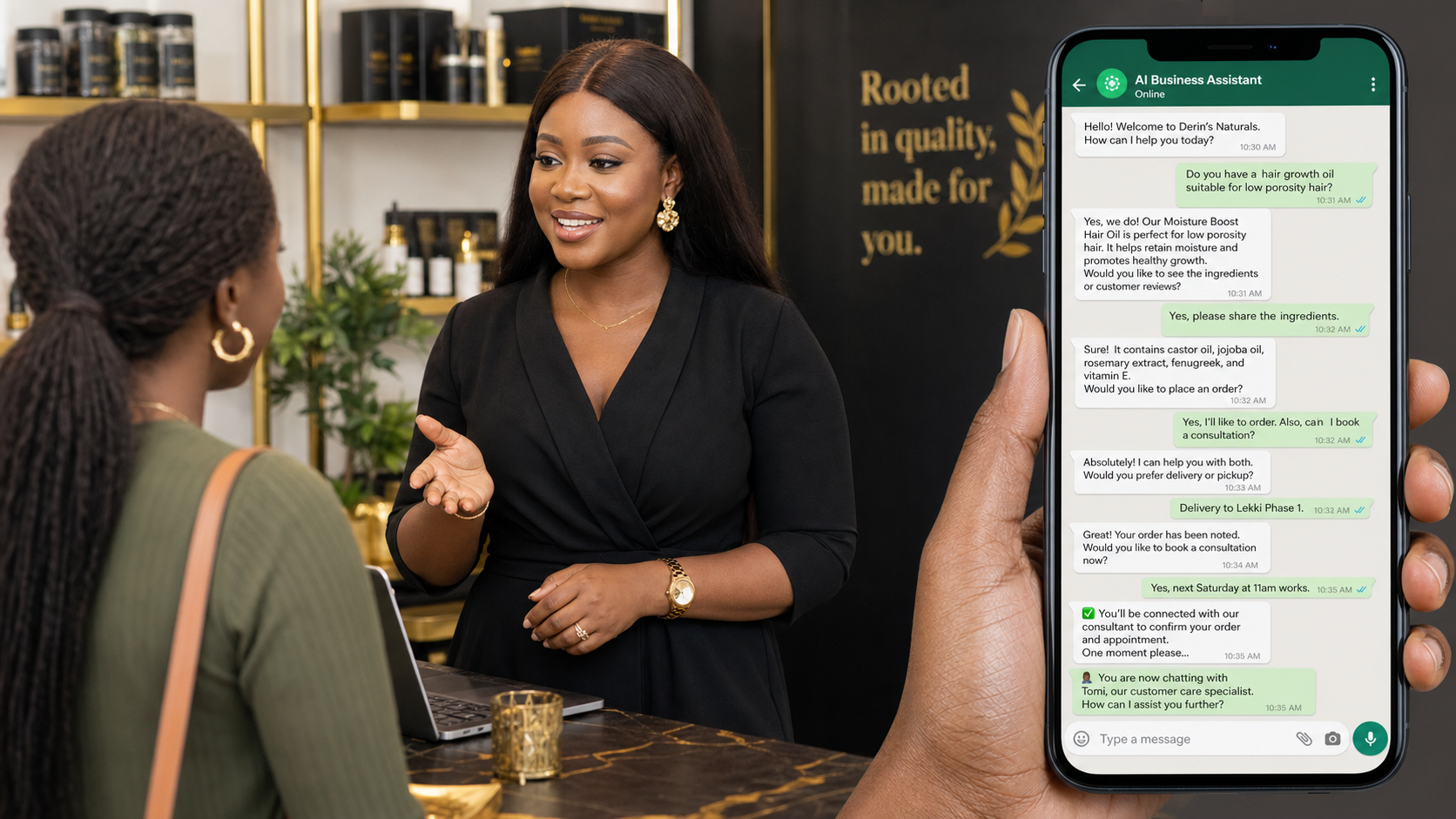
Connecting a catalogue, booking calendar, CRM, payment flow, inventory system or helpdesk adds useful power - and additional implementation work. A bot that can actually complete an action is more valuable than one that only says, "How may I help you?" in five different ways.
6. Human support and optimisation
Conversations change. Products change. Customers ask new questions. A good system needs review, testing, updates, reporting and a clear owner inside the business.
Four levels of WhatsApp automation
Level 1: Basic WhatsApp Business tools
Greeting messages, away messages, labels and quick replies are suitable for a small volume of predictable enquiries. They are a sensible starting point, but they still depend heavily on a person being available.
Level 2: Rule-based chatbot
Customers choose options from menus or trigger keywords. This can work for a narrow flow such as booking, collecting an order number or sharing opening hours. It becomes frustrating when customers speak naturally or go off-script.
Level 3: AI-powered chatbot
An AI chatbot can understand more natural questions and respond using approved business context. It can support product questions, FAQs, lead qualification and basic follow-up, with clear boundaries and escalation.
Level 4: Custom AI agent
This is the deeper system: knowledge base, tools, CRM, payment or booking actions, voice, analytics and human handoff. It is best for businesses where missed conversations have a meaningful cost.
What should a Nigerian business budget for?
Rather than pretending one price fits every business, use three questions to estimate the right level:
- Conversation volume: How many customer conversations arrive each week?
- Conversation value: Is each enquiry worth a small purchase, a large contract, a booking or a long-term relationship?
- Workflow complexity: Does the bot only answer, or must it qualify, check, book, collect, update and report?
A small seller with a short catalogue may need a lean setup. A property, education, healthcare or professional-services business may need a more careful system because the questions, handoff and risk are higher. You are not paying for the word "AI". You are paying for the useful work the system can reliably remove from your team's plate.
How to avoid a cheap chatbot becoming expensive
- Ask whether setup, integrations and ongoing support are included.
- Confirm whether the quote covers WhatsApp platform charges or only the software.
- Ask how human handoff works.
- Test the system with difficult, incomplete and local customer questions.
- Track qualified leads, bookings and sales - not just the number of automated replies.
How WTB can help
WTB helps you choose the right level of automation before you spend money on a tool. We can map the customer journey, write the approved knowledge, design the conversation, create lead-qualification rules, plan human handoff, connect the right marketing entry points and recommend a practical implementation path.
The goal is not to put a robot in front of your customers and hope for the best. It is to make sure every naira you spend on automation is connected to a clearer customer experience and a measurable business outcome.
Get the practical WhatsApp AI guides for Nigerian businesses
Know what you are buying
Let WTB recommend the right WhatsApp chatbot level for your business.
Tell us your message volume, customer questions and desired outcome. We will help you separate a useful system from an expensive auto-reply.
Related reading: Meta Business AI on WhatsApp and WhatsApp AI agents, voice notes and lead follow-up.