
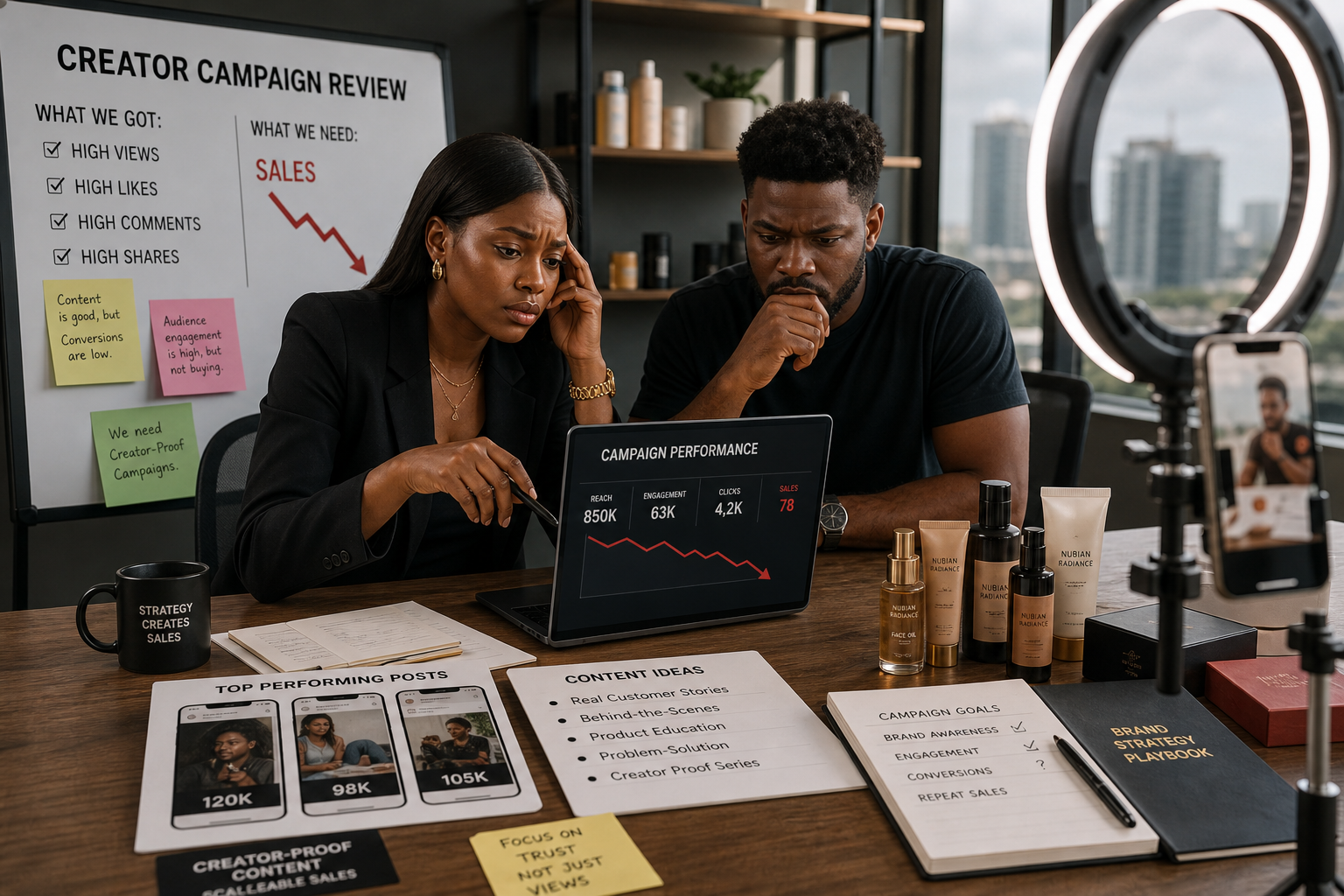
More creator spend is not automatically giving Nigerian brands more sales because too many campaigns still buy attention without building enough proof, trust, reuse value, or conversion structure around the content.
The creator boom is real. So is the disappointment.
Recent industry reporting keeps pointing in the same direction. The creator economy dominated major 2026 advertising conversations, and Kantar-linked coverage says 61% of marketers plan to increase creator investment. But another uncomfortable number sat in the same conversation: only about 6% of creator content is delivering both strong engagement and strong brand impact.
That is a very expensive mismatch.
Then you add Nigeria's own reality. A March 15, 2026 Guardian report on the 2026 Africa Creator Economy Report said the sector was valued at about $3.1 billion and could reach $17.8 billion by 2030. The same report also said more than half of African creators still earn less than $100 a month.
So yes, the market is growing. But the structure behind a lot of creator work is still messy, emotional, and uneven. Which means brands can spend more and still come back with very little that actually moves the business.
The problem is not that creators do not work
Let us be fair here. Creators still matter because they bring culture, attention, human context, and something many brand pages still struggle to build on their own: believable presence.
The problem is that too many businesses are buying the wrong thing from creators.
They are buying a post when they need a persuasion system. They are buying reach when they need repeatable trust. They are buying temporary hype when they need content that can keep working after the sponsored upload has already died in the scroll cemetery.
Why the content still is not selling
1. Too much sponsored content now looks sponsored from space
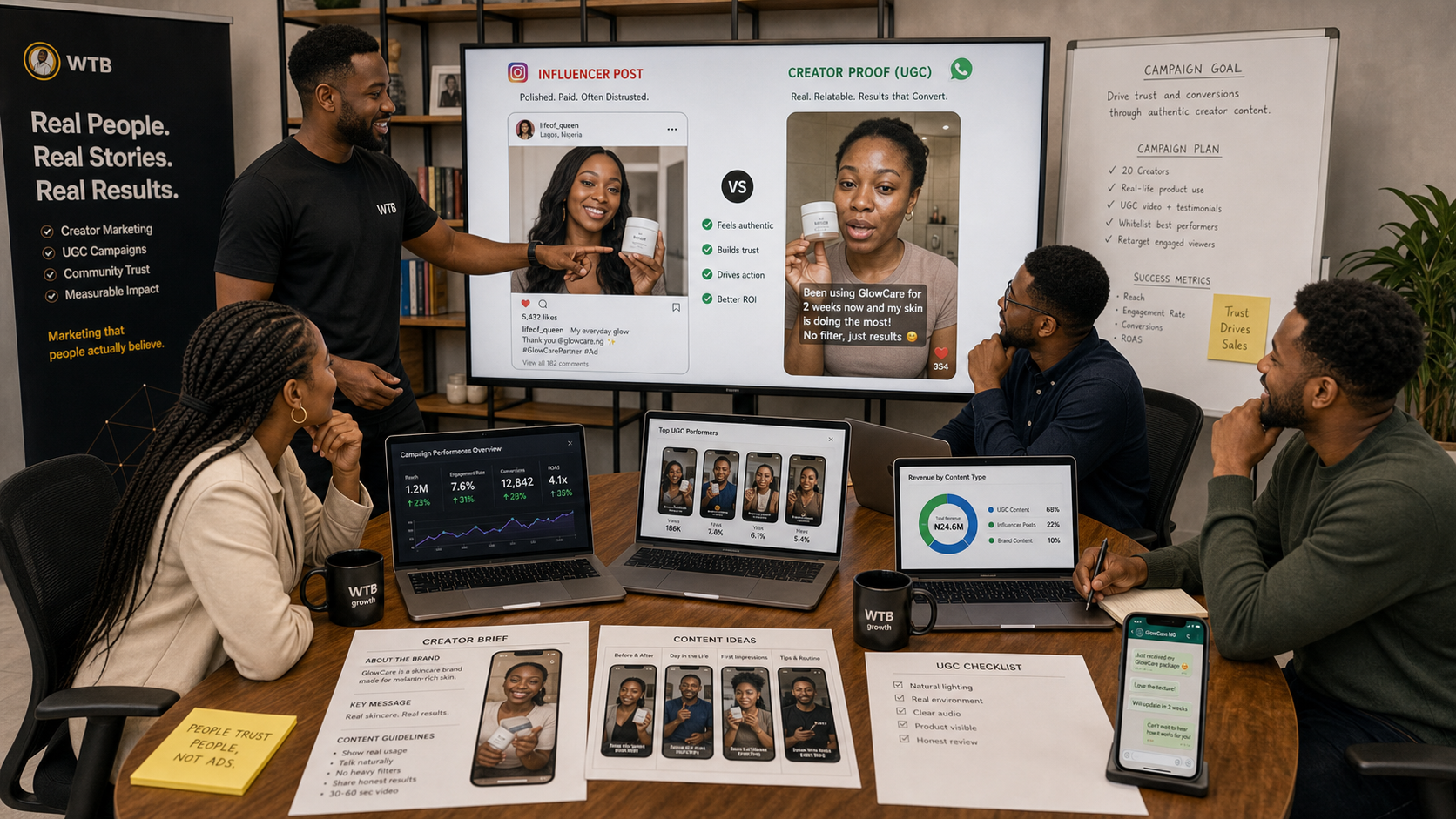
Audiences are not foolish. They know when a creator is reading from a dead brief written by somebody who has never used the product. If the content feels forced, the trust drops before the caption even gets to the discount code.
This is where ad fatigue creeps in. Not because people hate creators, but because they are exhausted by polished recommendations that feel emotionally rented.
2. Brands still confuse attention with persuasion
Views can make a team feel accomplished. Sales are less sentimental.
A creator can absolutely bring attention. But if the content does not explain the problem, demonstrate the product, reduce fear, answer doubt, or show context, then the user may enjoy the video and still move on with their wallet intact.
3. The business often has no system around the post
This part hurts, but it is true. Even good creator content underperforms when it lands on a confused product page, a weak offer, a bad website, slow WhatsApp replies, poor retargeting, or no follow-up plan.
So the brand blames the creator. The creator blames the algorithm. The algorithm goes home innocent.
4. Too many deals are still one-post-and-pray
One post can create awareness. It rarely builds enough belief by itself. Smart brands are moving toward systems: multiple angles, UGC variations, usage rights, retargeting edits, whitelisted ads, ambassador relationships, and stronger landing-page support.

What better creator marketing should look like now
Ask for proof assets, not just promotional posts
Your business should want creator content that can live beyond one upload: problem-solution clips, product-in-use videos, testimonial-style angles, FAQ answers, objection handling, founder-story reactions, and UGC-style edits that can work on your own brand pages too.
Design campaigns for reuse
If your brand pays for content, it should know what survives after posting day. Can the asset become an ad? A landing-page proof block? A retargeting clip? A website testimonial moment? A WhatsApp follow-up asset? If not, the spend may be too fragile.
Match creators to buyer reality, not just follower vanity
The right creator is not always the loudest creator. The right creator is the one whose tone, audience, category fit, and storytelling style make your business easier to believe.
Build the funnel before demanding miracles
If the creator campaign is going to work, your website, landing page, WhatsApp flow, offer, retargeting, and conversion path need to stop acting like unrelated cousins at a family event.
What this means for Nigerian businesses right now
If your business is spending more on creators and not feeling enough movement back, do not ask only, “Should we reduce budget?” Ask the better question: “What exactly did we buy?”
Did you buy a post? A name? A moment? A screenshot? Or did you buy proof, reuse value, better ad inputs, stronger landing-page persuasion, and a content system that can keep compounding?
That question changes everything.
How WTB helps brands stop wasting creator budget
WTB helps brands separate creator noise from creator value. We help shape the brief, the angle, the asset list, the content reuse plan, the landing-page support, the ad iteration path, and the follow-up structure so creator campaigns are not carrying the entire sales burden alone.
That means your business is not just chasing views. It is building a more believable path from attention to action.
Sources behind this article
This article draws on the Guardian report published on March 15, 2026, plus 2026 creator-economy and Kantar-linked reporting on growing creator spend, ad fatigue, and weak brand impact, including coverage from The Economic Times and creator-budget discussion highlighted around Cannes 2026.
FAQ
Are creator campaigns still worth it for Nigerian brands?
Yes, but only when the business designs them as part of a wider conversion system instead of expecting one post to do all the work.
What should a brand ask for from creators now?
Ask for reusable proof assets, multiple content angles, UGC-style edits, stronger storytelling, and rights that allow the content to keep working across organic, ads, and landing pages.
Why do some creator campaigns feel successful but still do not bring sales?
Because attention and sales are not the same metric. A campaign can look lively on the surface while still lacking trust depth, offer clarity, landing-page support, or proper follow-up.
Can WTB help structure creator campaigns better?
Yes. We help businesses shape creator strategy, content direction, creator proof, UGC workflows, landing-page support, and paid amplification paths that make creator spend more commercially useful.
Want creator spend that feels more like revenue work?
If your business wants help with creator strategy, UGC, influencer structure, paid amplification, landing-page support, or follow-up systems, start with our contact page, review our Influencer Marketing Agency Nigeria page, or book a strategy call.