
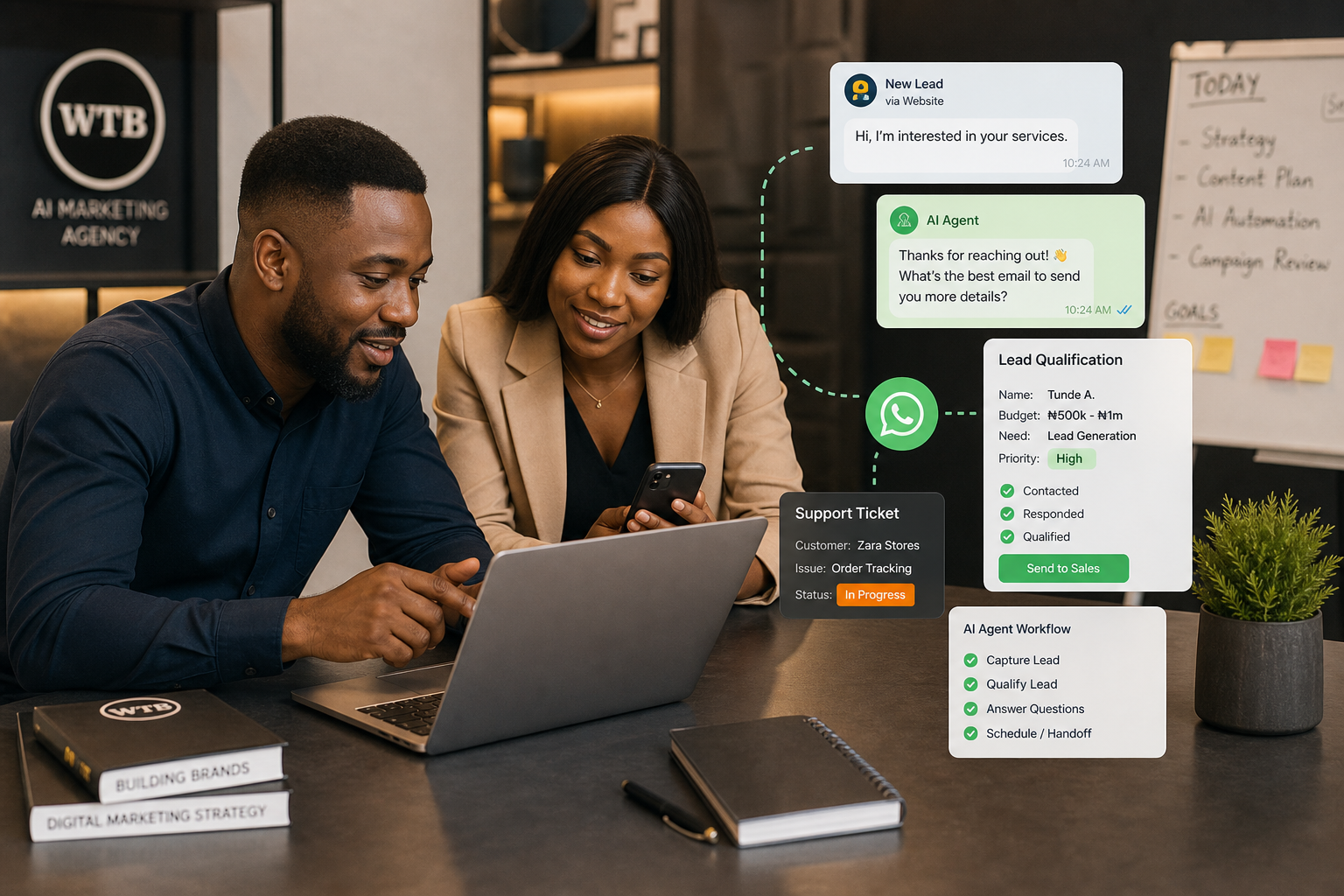
The best first AI agent for many businesses is a lead qualification and follow-up agent. It helps your business reply faster, answer common questions, route serious enquiries, reduce missed leads, and keep important conversations moving without depending on one tired human being remembering everything.
AI agents are not just chatbots with new perfume
That is where many businesses will get confused. They hear “agent” and imagine one of two extremes: either a fancy chatbot that says hello and then becomes useless, or a science-fiction robot that will somehow run the company by itself before lunch.
The truth is less dramatic and more useful.
An AI agent is best understood as a system that can receive an input, reason through a task, use tools or connected information, and take the next useful action inside a workflow. That workflow might be support, lead capture, booking, internal reporting, WhatsApp follow-up, or customer routing.
So the real question is not, “Should my business build an AI agent because everybody is shouting about it?” The real question is, “Where is my business losing time, leads, clarity, or follow-up every single week?”
Why this matters now
Because buyer expectations are becoming rude in the way modern expectations always become rude. People want answers faster. They want follow-up sooner. They want support to feel immediate. They want your business to remember context, respond clearly, and move them toward a decision without making them repeat themselves seventeen times.
Meanwhile, most teams are still juggling WhatsApp chats, form entries, DMs, call requests, missed emails, forgotten replies, and one staff member who somehow knows everything but is perpetually overwhelmed.
That is exactly the kind of environment where a practical AI agent starts to make business sense.
Recent research and deployment reports in 2026 show that businesses are already pushing beyond basic AI assistants into agents that help with customer support, workflow execution, knowledge retrieval, and multi-step business tasks. In other words, this is no longer just a “future trend” topic. The shift has already started.
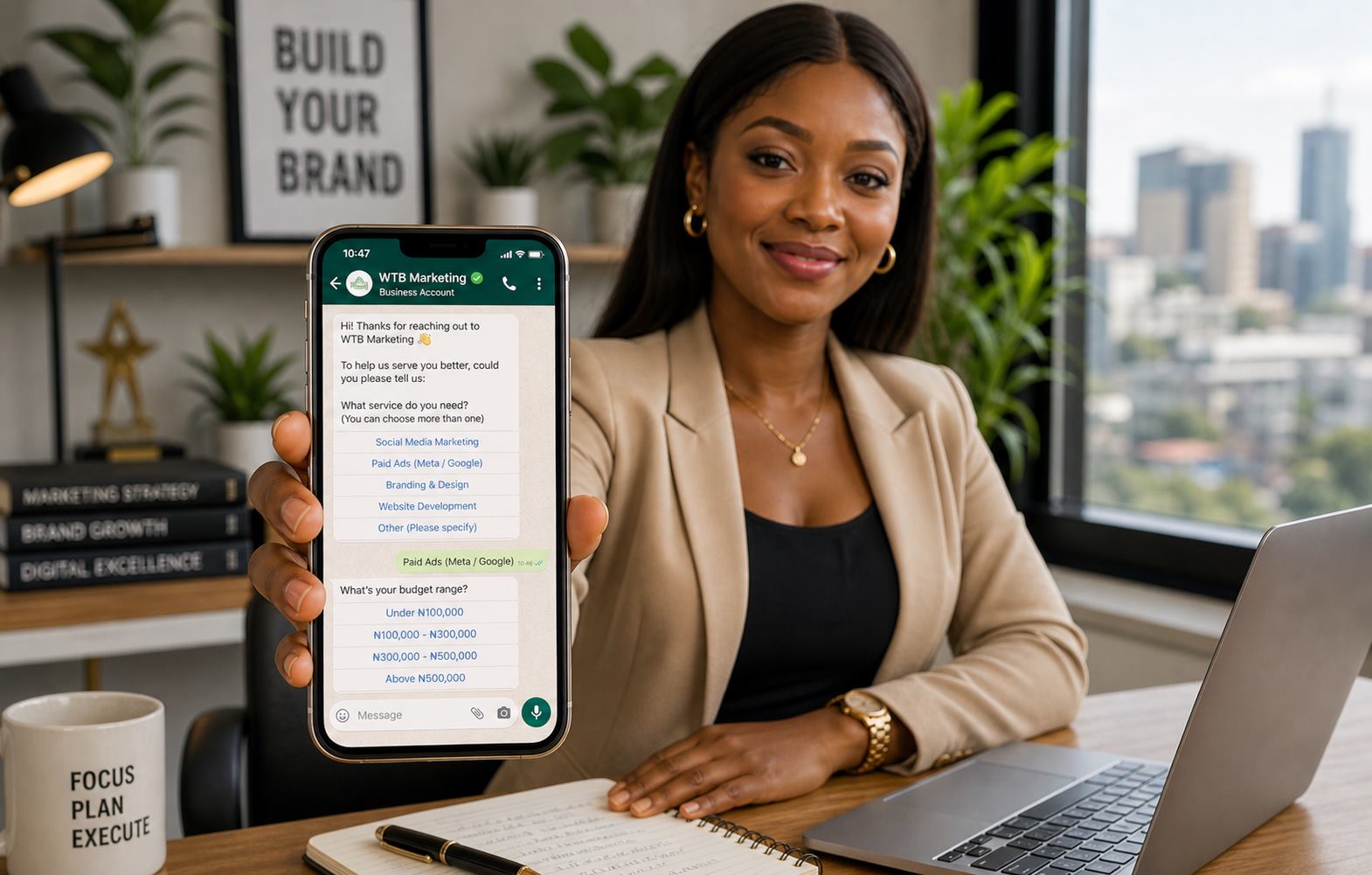
The first AI agent most businesses should build
For many Nigerian businesses, the best first agent is not an internal research agent, not a boardroom strategy agent, and definitely not an agent that sounds impressive but never touches revenue.
It is a lead qualification and follow-up agent.
That means an AI agent that can:
- reply quickly when a lead comes in
- ask the right first questions to qualify interest
- answer common business questions without delay
- route strong leads to the right team or next step
- book calls or direct enquiries toward action
- follow up automatically when the buyer goes quiet
- keep records cleaner so sales conversations do not disappear into chaos
That is not flashy technology theatre. That is basic commercial hygiene with better tools.
Why this first agent matters more than people think
1. It protects the attention you already paid for
Many businesses are spending money on ads, content, creators, websites, or SEO and then quietly wasting the resulting attention because the response system is too slow, too messy, or too manual. A lead-follow-up agent helps your business stop leaking opportunity after the expensive part has already happened.
2. It makes the business feel more responsive
Buyers may not understand your stack, your workflow, or your internal pressure. They only understand whether your business feels serious. Fast, clean, useful replies create that feeling. Slow silence creates the opposite feeling.
3. It reduces human bottlenecks
One person should not have to manually carry every enquiry, every reminder, every follow-up, and every simple question. That is how businesses become inconsistent. AI agents do not remove human judgment. They remove the repetitive friction that keeps human judgment from being used where it matters most.
4. It gives you cleaner data and better decisions
When conversations are structured better, the business starts to learn more clearly. What are people asking most? Where are good leads coming from? What objections keep repeating? Which offers attract noise and which ones attract real intent? Good agent design can make those patterns easier to see.

What this first AI agent should not do
This part is important because businesses can ruin the whole idea by chasing too much too early.
Your first agent should not:
- pretend to replace your entire team
- answer every possible question badly
- sound robotic and confusing
- operate without rules, fallback paths, or escalation
- live in isolation from your real sales process
A bad agent can create new chaos. A good one reduces it.
What businesses should connect it to first
If you want the first agent to be actually useful, connect it to the places where enquiries already happen:
- website forms
- Instagram or social DMs
- call booking requests
- email enquiries
That is why one of the smartest early agent angles for Nigerian businesses is often a WhatsApp AI agent or a sales follow-up agent. The commercial path is easier to see. The value is easier to feel. And the missed-lead problem is usually already there.
Why businesses should build this with WTB
Because most businesses do not need a random agent demo. They need a useful agent connected to the way the business actually gets customers.
WTB helps businesses build practical AI agents around real marketing and sales workflows. That means we do not only think about “the AI part.” We think about the full chain:
- where the lead comes from
- what the prospect needs to know first
- how the conversation should qualify itself
- when to escalate to a human
- how to protect the brand tone
- how to connect the agent to pages, offers, and conversion paths
That is the difference between building something that sounds impressive in a meeting and building something that actually helps the business reply faster, qualify better, and close more cleanly.
What this should mean for your business right now
If your business is already getting enquiries but not handling them cleanly, you do not need to wait until “AI agents become more normal.” By the time they feel fully normal, the early advantage will already belong to businesses that started with one useful workflow and kept improving it.
So do not ask, “How do I build the most advanced agent in Africa?” Ask the better question:
“What is the first agent that would save us time, protect more leads, and make our business feel more responsive this month?”
That question is usually where the real opportunity starts.
Sources behind this article
This article draws on 2026 research and deployment evidence around enterprise and customer-support AI agents, including A Survey of AI Agents in Enterprise and Deploying a Customer Support Agent at Scale.
FAQ
What is the best first AI agent for a small or growing business?
Usually a lead qualification and follow-up agent, because it supports revenue, response speed, and cleaner customer handling without trying to do too much at once.
Should a business build one agent or many agents first?
Start with one useful agent tied to a painful workflow. Do that well first before expanding.
What is the difference between an AI agent and a normal chatbot?
A normal chatbot often follows simple scripts. An AI agent is usually more workflow-aware and can reason through steps, use connected information, and move the task forward more intelligently.
Can WTB help build WhatsApp AI agents and business follow-up agents?
Yes. WTB can help businesses design practical agents for WhatsApp follow-up, lead qualification, support routing, and connected marketing workflows.
Want to build the right first agent instead of the most confusing one?
If your business wants help designing a practical AI agent for leads, support, WhatsApp follow-up, or sales flow, start with our contact page, review our Marketing Automation Agency Nigeria page, or book a strategy call.